Popular Games
 All Games





Whiteout Survival Dreamscape Memory Guide: Best Strategy, Rewards, Maps & Spending Tips
2026-07-01


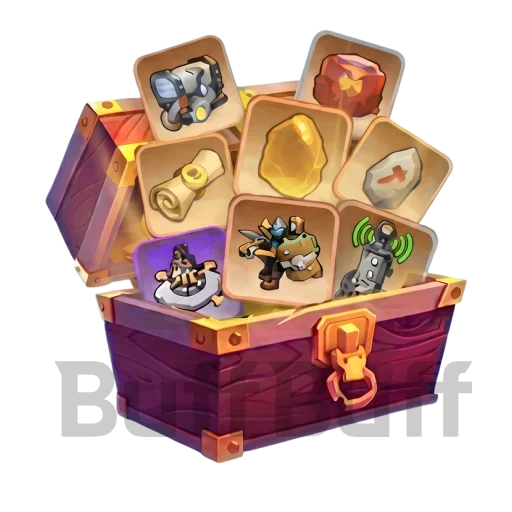
Whiteout Survival Dreamscape Memory is one of the most rewarding recurring mini-events in Whiteout Survival. It combines hidden-object speed gameplay, chapter-based progression and a long-track reward ladder through Recall Road. To make the most of your gems beyond the Whiteout Survival Lucky Wheel, be sure to also read our Shop Strategy guide.If you want better clear rates, better Dream Fishbits efficiency and faster access to premium cosmetics, this Whiteout Survival Dreamscape Memory guide breaks down exactly how to play.
What Is Whiteout Survival Dreamscape Memory?
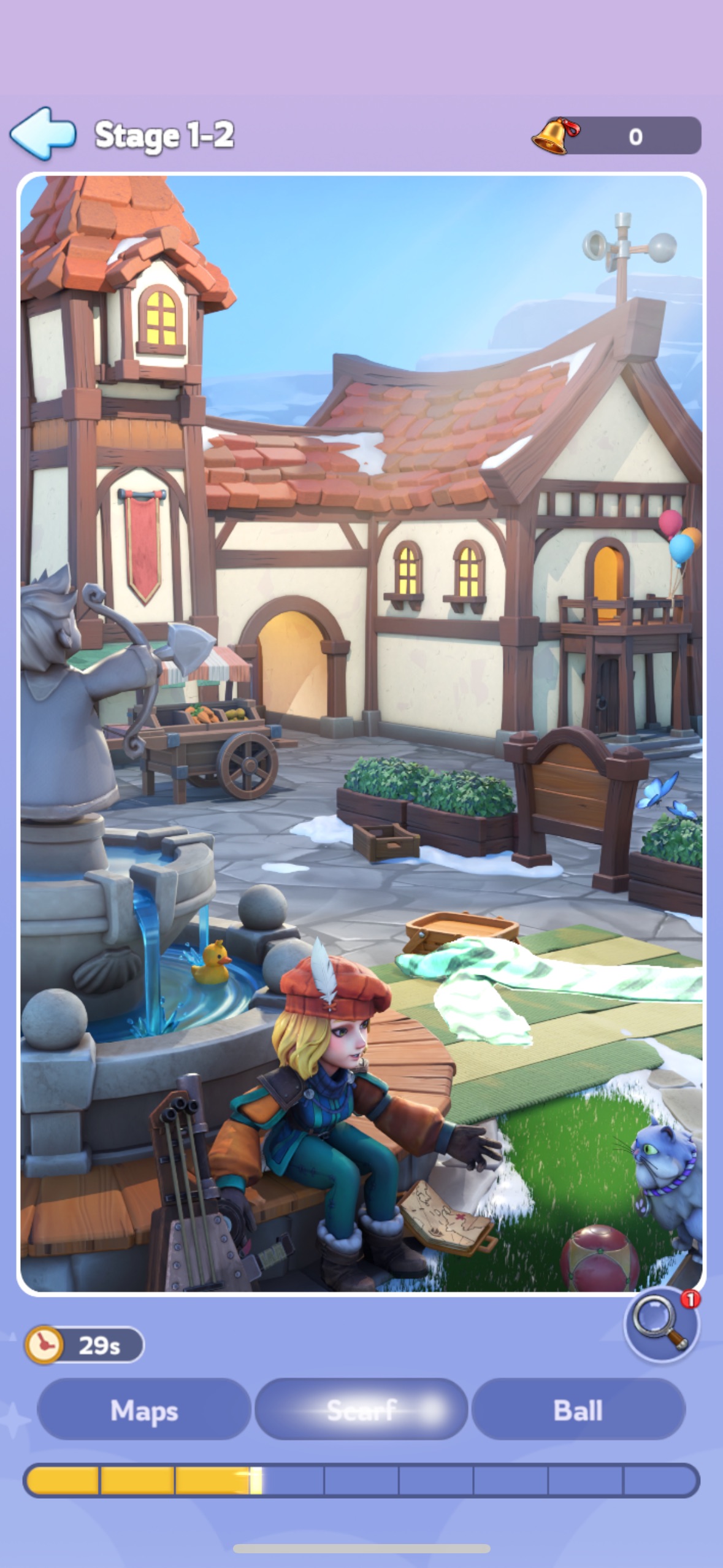
Whiteout Survival Dreamscape Memory is a timed hidden-object mode built around chapter progression. In each section, you scan a scene, locate target objects and clear all objectives before the timer ends. As chapters advance, section count rises and your margin for error gets tighter.
For optimization-focused players, the event is more than a mini-game: it is a recurring source of cosmetics, progression materials and long-term collection value through Recall XP and Recall Road milestones.
Core Event Currencies and Systems
Underst anding the event economy is m andatory if you want consistent value. The key systems are Dream Fishbits, Dreambells, Dream Fishtins, Recall XP and Recall Road.
| System | What It Does |
| Dream Fishbits | Primary entry currency to start chapter sections. |
| Dreambells | Used for extra time and a hint when a section is near failure. |
| Dream Fishtins | Pack/pass item that persists in backpack and converts into Fishbits when opened. |
| Recall XP | Earned from chapter/section progression and used to advance Recall Road. |
| Recall Road | Long-track reward lane with premium cosmetics and event-exclusive collectibles. |
How to Play Dreamscape Memory Step by Step
- Spend Dream Fishbits to enter a chapter and launch a section.
- Read the three-object target list at the bottom and run a left-to-right scan pattern instead of r andom tapping.
- Finish all targets to clear the section and repeat until the chapter is complete.
- If time is nearly gone, spend Dreambells for extra seconds and a hint. Use this only when the section win is highly likely.
- Claim section and chapter rewards, then push your Recall Road progression before reset windows.

Failure Rules, Refund Logic and Why Practice Matters
If you fail a section, chapter progress resets. That makes chapter routing and map familiarity the core skill ceiling. Early chapters refund some Dream Fishbits, while later chapters can return little to none, so mistakes become progressively expensive.
| Chapter | Typical Fishbit Return After Failure |
| Chapter 1 | 10 |
| Chapter 2 | 16 |
| Chapter 3 | 18 |
| Chapter 4 | 16 |
| Chapter 5 | 10 |
| Chapter 6-10 | 0 |
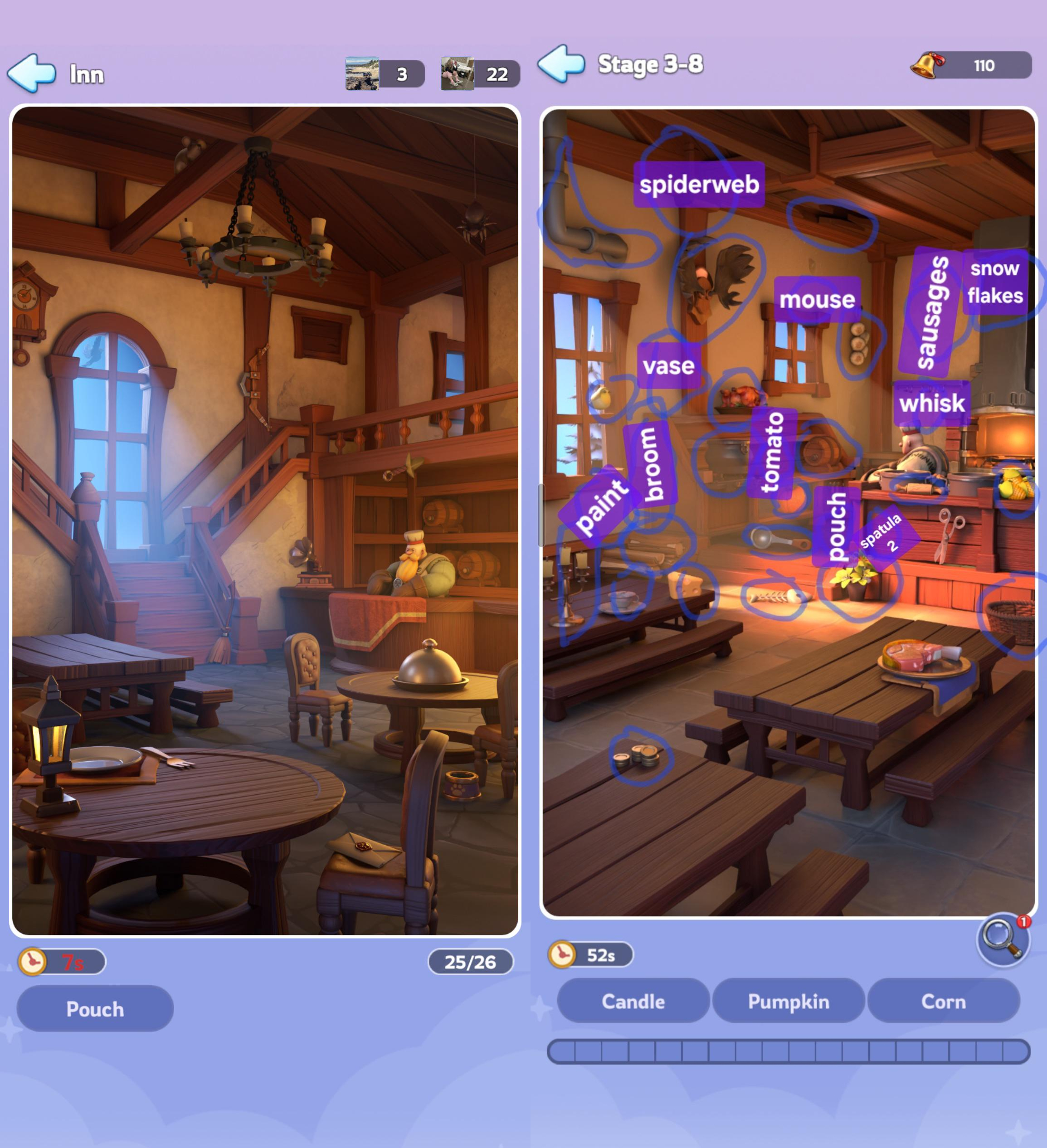
A high-efficiency routine is to rehearse map layouts on a secondary account or dedicated practice references first, then run your main account with near-zero hesitation.
Advanced Chapter-Clear Strategy (Speed + Accuracy)
For higher chapters, raw reaction speed is less important than repeatable search discipline. Use these methods:
- Zone Scanning: Split every scene into 4 visual quadrants and clear them in fixed order.
- Object Silhouette Memory: Learn broad shapes first (hooks, circles, long tools), then color details.
- Bottom-Bar Cycling: Re-check all three requested items every 2-3 seconds to avoid tunneling.
- Hint Threshold Rule: Trigger hints only when one miss blocks a near-certain clear.
- Time Banking: In easier sections, finish quickly to preserve emotional control for difficult rounds.
Rewards Priority: What Is Actually Worth Chasing?
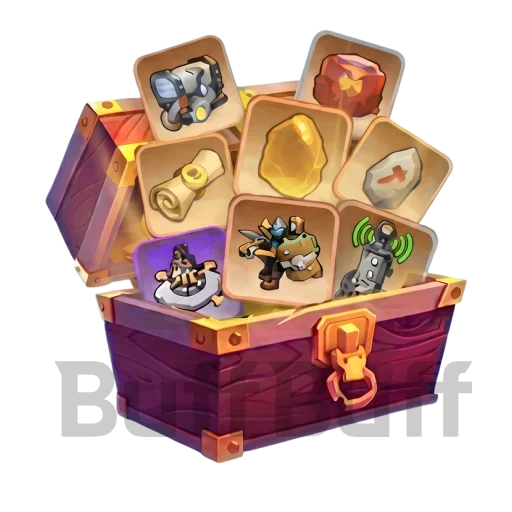
The event gives value through Daily Missions, Chapter Rewards and Recall Road. For most accounts, the best targets are exclusive cosmetic unlocks and any item that cannot be efficiently replaced elsewhere.
High-priority showcase rewards commonly include Cloud Fantasy (city skin), Ninja Meow (march skin), Dream Odyssey (avatar frame) and Dream Nest (event isl and building).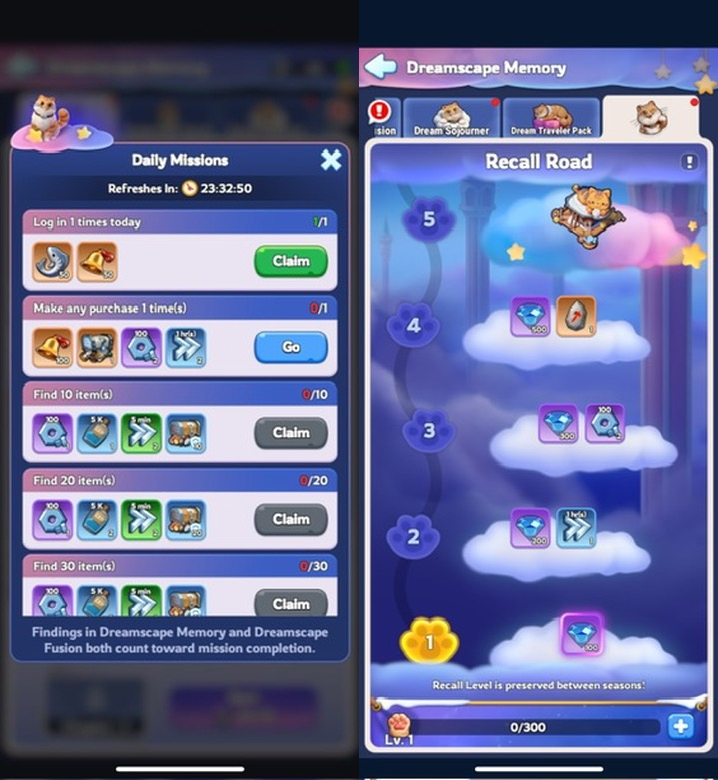
Map Pool and Scene Order: What Changes and What Stays Fixed
A frequent misconception is that every run is fully r andom. In practice, chapter scene order can vary by player, but object positions inside a specific scene remain stable. That is why map memory and screenshot practice are so strong.
Recent community map pools include legacy scenes (such as B andst and, Aquarium, Museum, Terminal, Garage, Classroom and Mansion) plus newer rotations like Dining Car, Docks, Snow Lodge, Chinese Temple and Conquering Sword Co-op. Treat each scene as a reusable puzzle template.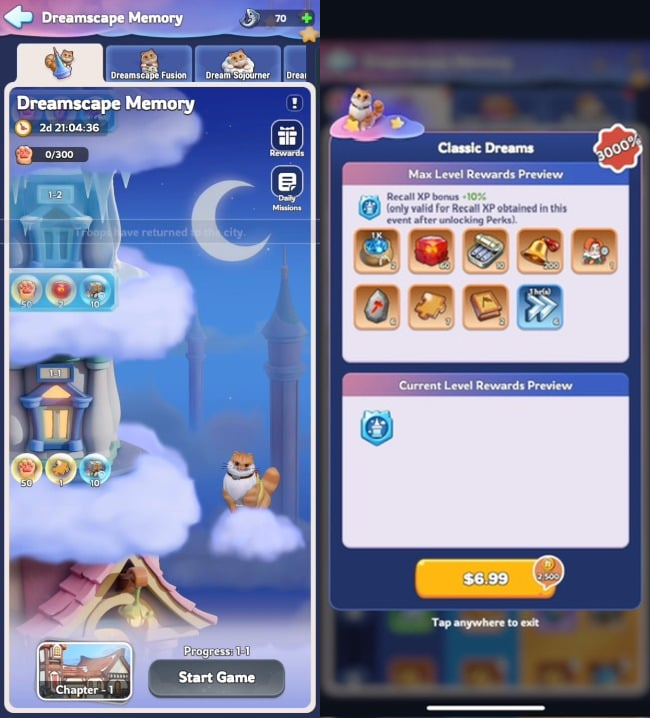
Passes, Packs and Spending Efficiency
If you spend, evaluate purchases by Dream Fishtins gain and Recall XP acceleration, not by one-time filler materials. In many cycles, lower-tier passes give the cleanest value-per-dollar for active players, while larger bundles are mostly for completion-focused accounts.

Common Mistakes to Avoid
- Burning Dreambells too early instead of saving them for near-clear scenarios.
- Ignoring chapter reset risk and over-committing to unfamiliar scenes.
- Treating all rewards equally instead of prioritizing Recall Road exclusives.
- Forgetting event-end behavior: unused raw Dream Fishbits can expire, while Dream Fishtins and Dreambells can persist in inventory.
- Relying on r andom tapping instead of structured scan routes.
Conclusion
To maximize Whiteout Survival Dreamscape Memory, focus on map familiarity, controlled hint usage and reward-priority discipline. Players who combine repeatable scan patterns with smart Dream Fishbits management consistently clear deeper chapters and convert the event into long-term account value.For more Arena Breakout intel, deep-dive guides, follow buff buff.
If you run this as a routine each event cycle, Recall Road progression becomes predictable, your failure rate drops sharply and premium cosmetics become realistic targets without wasteful spending.

Whiteout Survival is a survival strategy game that challenges you to rebuild a frozen town.